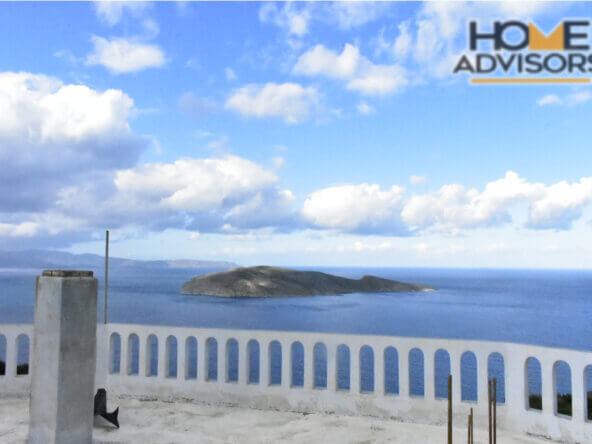
Village of Kavousi
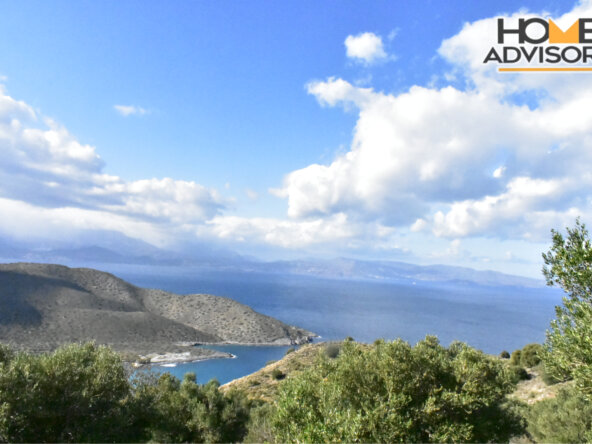
Kavousi is a historic village in the municipality of Ierapetra, 19 km (11.8 mi) northeast of Ierapetra, 26 km (16 mi) east of Agios Nikolaos and 42 km (26 mi) west of Sitia. “Kavousi” in the Cretan dialect means “water source” (Greek: Πηγή). The village is located in the northern foothills of the Thripti mountain range at an elevation of 140 meters above sea level. Many archaeological sites have been discovered in the area of Kavousi, among which are Vronda, Kastro, Azoria, Chrysokamino and the isle Pseira. Kavousi lies just 3.6 km (2.2 mi) south of Tholos Beach. The village has views over the Gulf of Mirabello and the Isthmus of Ierapetra.
Historical Data
The village is surrounded by many sites of archaeological interest, such as Vrontas, next to Kastro (both are pre-Minoan settlements) and Azorias , a hill on which a city of archaic times has been discovered. Also, in the surrounding area have been found Byzantine churches, such as that of Agios Apostolos, with frescoes of 1456. The oldest mention of the village is made in 1577 by Francisco Barocci, but the area has been inhabited for thousands of years and this is obvious from the multitude of Minoan settlements have been excavated in the surroundings and the rare religious monuments.
Kavousi was a large village during the Venetian occupation. In the census of Kastrofylakas in 1583 it is mentioned as Cavussi with 637 inhabitants. In the Egyptian census of 1834 it had 100 Christian and Turkish families. In 1881 it had 636 Christian inhabitants and 310 Turks.
Sights
Just 3 km from the Centre of the village lies Tholos beach, a sandy and shallow beach with many trees and the ruins of Roman warehouses, standing imperiously. A little near there is, also, the remarkable frescoed chapel of St. Anthony. In the opposite side you can see the island of Pseira (Louse), where thousands of years ago was a key piece of the Minoan civilization. A large port and a small city was discovered in the beginning of the last century. In 2006 was, also, discovered a shipwreck of the Minoan era.
The ancient and highly impressive olive tree, aged approximately 3,500 thousand years, with the huge trunk diameter exceeding 20 meters. One of the oldest trees in the world that has been designated a protected monument, due to its proximity to Minoan settlements.
The ruins of the temple of Saint Ioannis at Agiomandra gorge that was built by a hermit in Byzantine Period A, in a cave west of the village, which leads to a small cove in the sea, the Agiomandra Beach.
The old copper mine at “Chrisokamina” location and, next to it, the “Theriospilo” cave with the stalagmites.